Context
An Argentine e-commerce business needed a WooCommerce store built from scratch. The brief was clear: fast, clean, and functional. No design agency involved — technical build and performance ownership from day one.
Problem
Most WooCommerce builds accumulate technical debt immediately — demo imports, redundant plugins, unoptimized images, no caching strategy. The result is a store that works but performs poorly from the first day it's live.
The goal here was to break that pattern.
Constraints
Implementation
Built from scratch — no demo imports, no page builder bloat. WooCommerce configured with a minimal plugin stack. WP Rocket tuned specifically for WooCommerce — cart and checkout pages excluded from caching, product pages optimized aggressively.
Images optimized before upload, WebP conversion active. Total page size achieved: 205KB — exceptionally lean for a WooCommerce store.
Cloudflare proxy active for CDN and additional performance layer. SSL A confirmed at launch.
Tradeoffs
WooCommerce by default loads its scripts and styles on every page. Selective script loading was implemented — WooCommerce assets only load on shop, product, cart, and checkout pages. This required testing across the full purchase flow to confirm no breakage.
Stack
Before / After
| Metric | Result |
|---|---|
| Mobile PageSpeed | 98 / 100 |
| Desktop PageSpeed | 99 / 100 |
| LCP | 2.1s |
| GTmetrix Grade | B |
| SSL Labs | A |
| Total page size | 205 KB |
| Total requests | 9 |
New build — performance baseline established at launch.
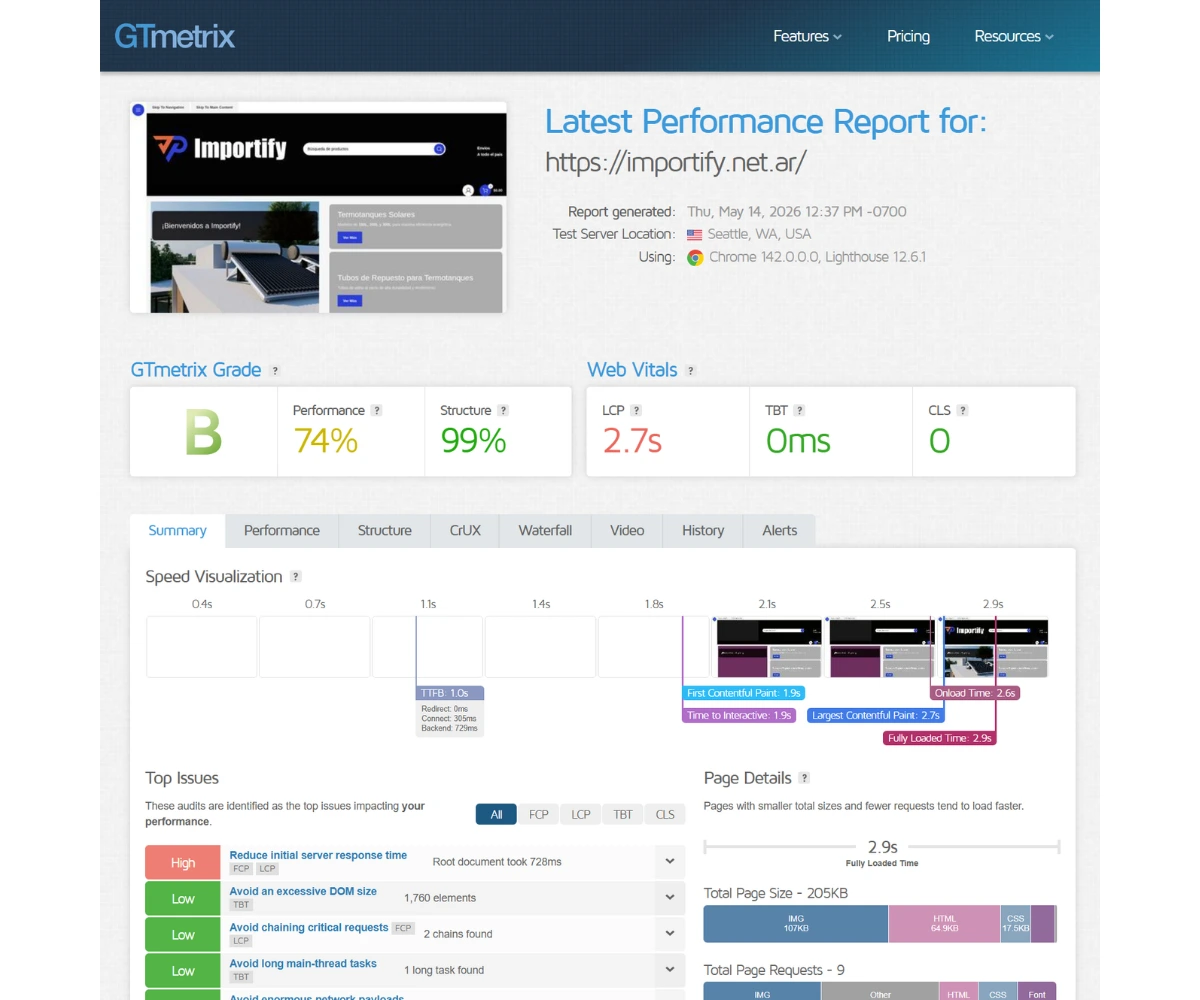
GTmetrix Grade B · Performance 74% · LCP 2.7s · CLS 0 · May 2026
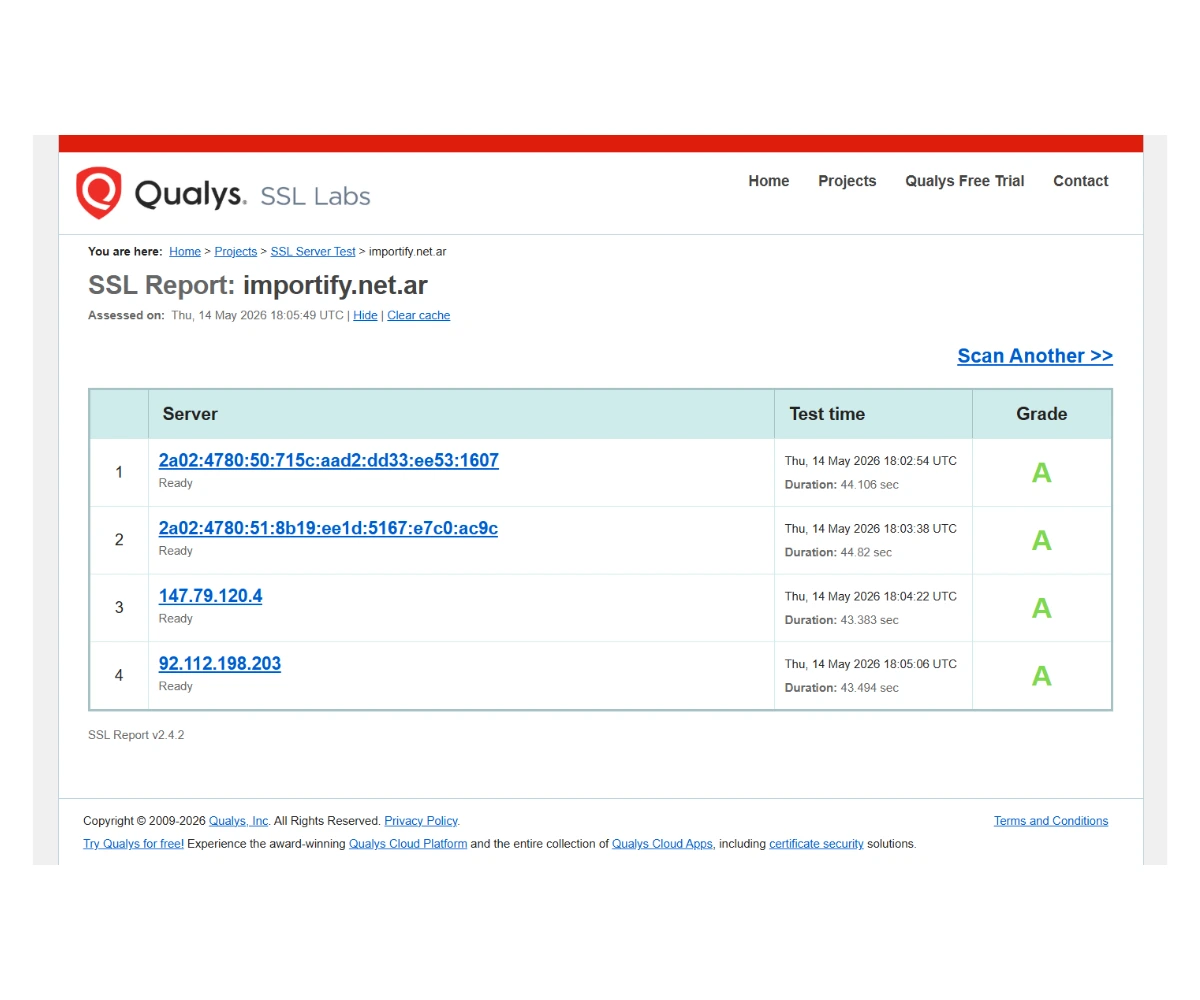
SSL Labs Grade A · 4 servers · May 2026
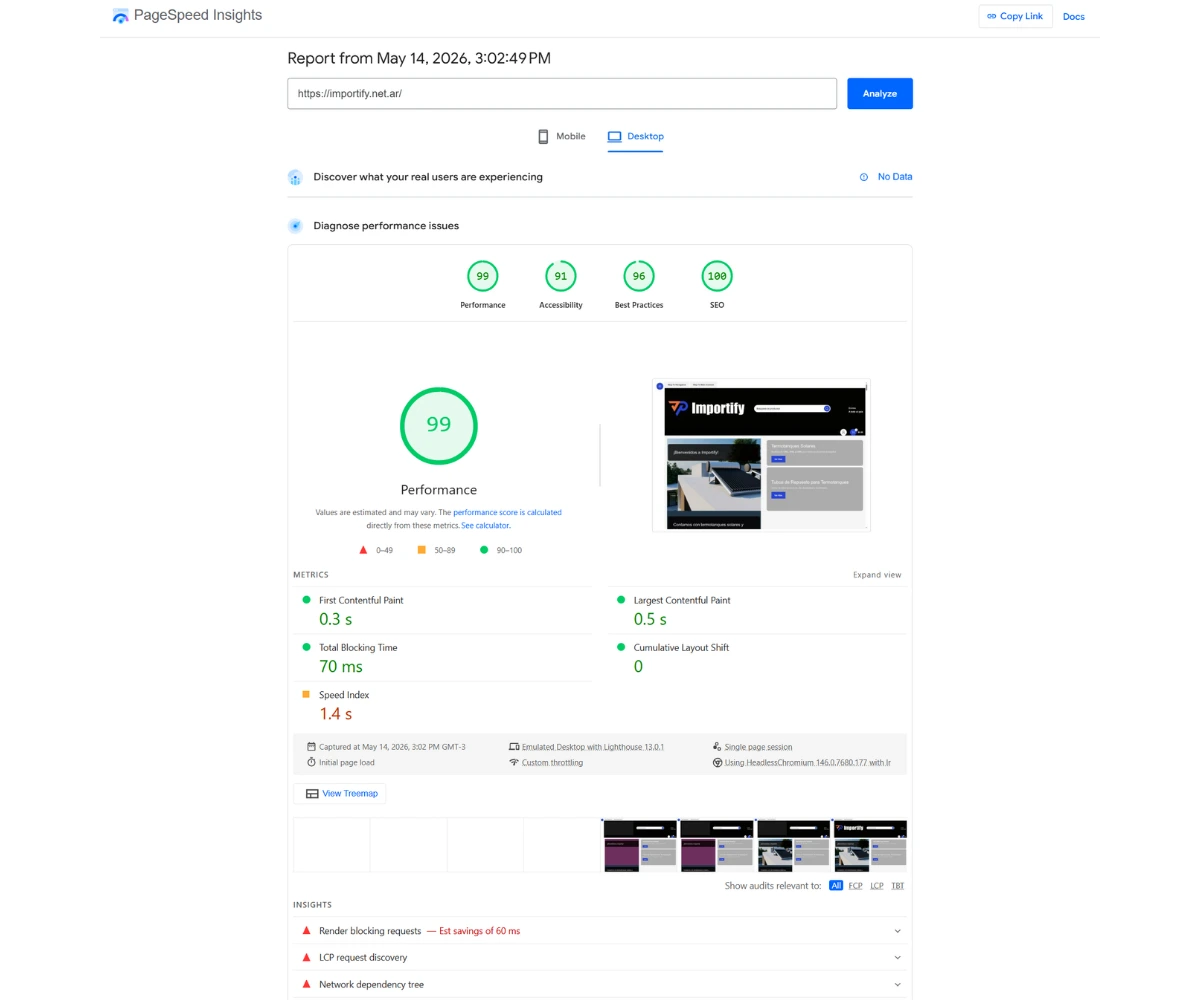
PageSpeed Desktop 99 · Accessibility 91 · LCP 0.5s · May 2026
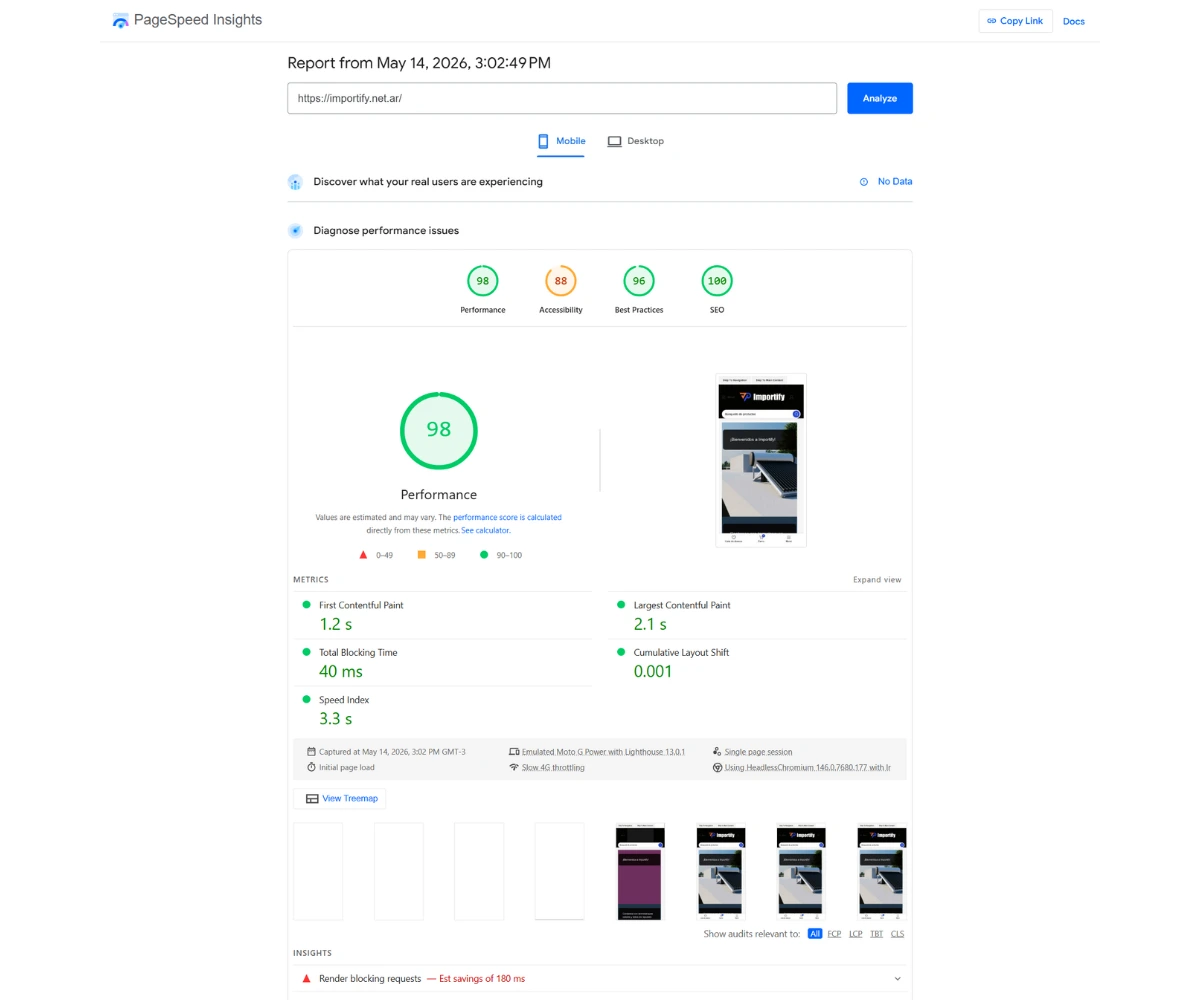
PageSpeed Mobile 98 · Accessibility 88 · LCP 2.1s · May 2026
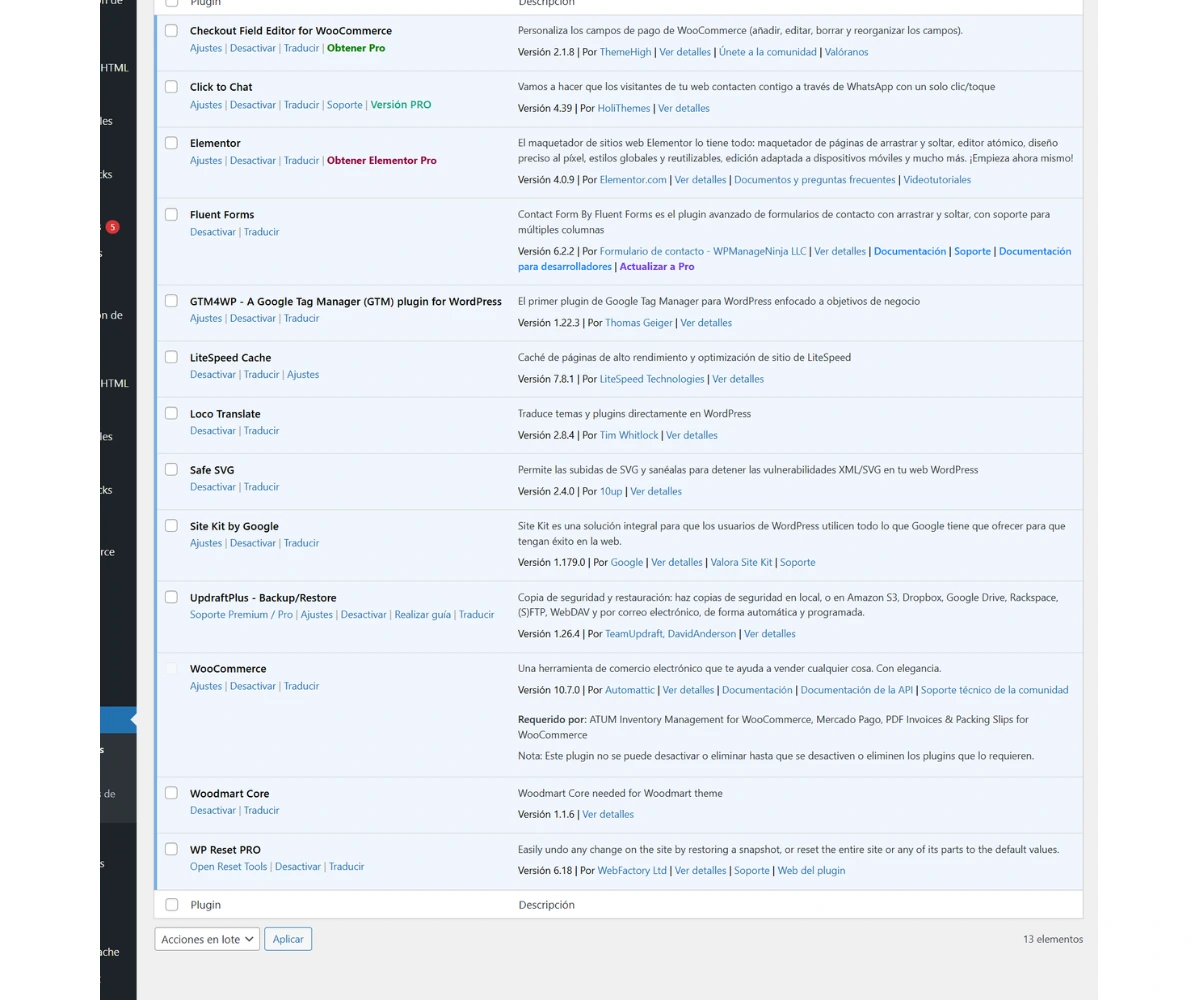
Plugin Stack · 13 active plugins · WooCommerce + LiteSpeed · May 2026
Outcome
Store launched with Mobile PageSpeed 98 — in the top percentile of WooCommerce performance benchmarks. 205KB total page size is exceptionally lean for a store with product images. Client managing products independently post-launch.
Lessons
WooCommerce performance is almost entirely determined by build decisions, not post-launch optimization. A disciplined approach to plugin selection, selective script loading, and image workflow produces results that most optimization sprints can't match retroactively.